
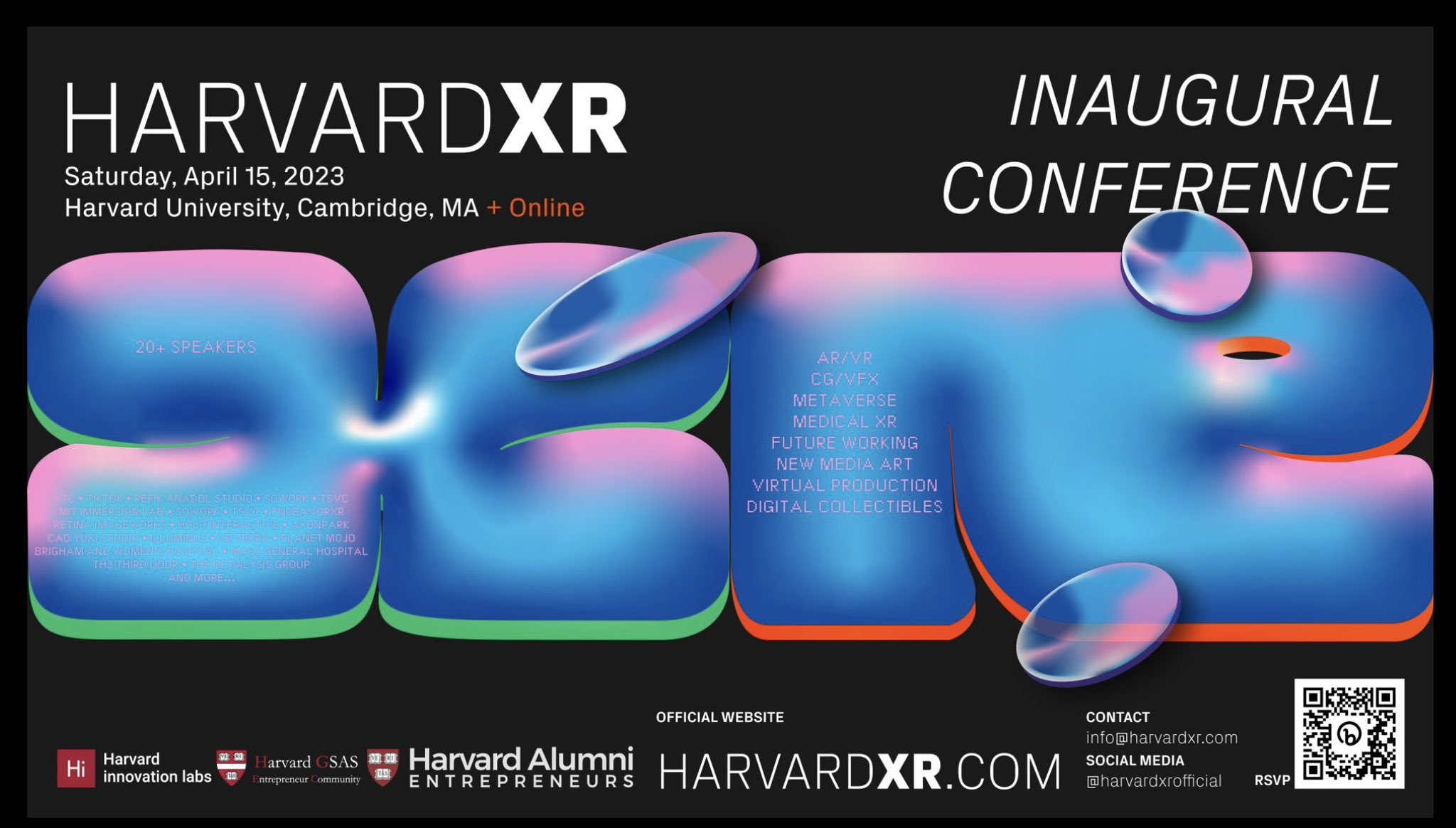
The HarvardXR conference is an annual event organized by the Harvard University Alumni Association and Harvard’s Virtual and Augmented Reality (VAR) Club. The conference focuses on exploring the latest advances and future trends in the field of augmented reality (XR). These include virtual reality (VR), augmented reality (AR), mixed reality (MR), and other immersive technologies that are transforming the way we interact with digital content and the world around us.
The conference has been held for several years, and each year brings together leading experts, researchers and enthusiasts from various fields, including technology, education, entertainment, healthcare and more. The aim of the conference is to provide a platform to discuss the latest research, share best practices and explore the potential applications of XR in different industries.
Previous conference topics
Over the years, the HarvardXR conference has covered a wide range of topics related to XR. In 2021, the conference focused on the role of XR in healthcare, education and entertainment. Speakers discussed the potential of VR and AR to enhance medical education, improve classroom learning, and create immersive entertainment experiences.
In 2022, the conference explored the future of XR and its potential impact on various industries. Speakers discussed the latest advances in XR technology, including the use of haptic feedback, eye tracking and artificial intelligence to create more realistic and immersive experiences.
Interesting topics from the HarvardXR conference 2023
The 2023 edition of the HarvardXR Conference brought together a diverse group of experts to discuss the latest developments in XR technology. Here are some of the most interesting topics presented at the conference:
XR in architecture and design
One of the most exciting applications of XR is in architecture and design. XR technology allows architects and designers to create virtual models of buildings and spaces, allowing them to test and improve their designs before construction. Lectures focused on XR tools for architects and designers, including virtual walks, 3D modeling and collaboration tools.
XR in games and entertainment
XR is already transforming the gaming and entertainment industries, and the future looks even more exciting. Speakers at the conference discussed the latest advances in XR gaming, including the use of haptic feedback and artificial intelligence to create more realistic and exciting experiences. They also discussed XR’s potential to transform live events, including concerts and sporting events.
XR in healthcare
XR has the potential to revolutionize the healthcare industry, from medical education to patient care. The main topics were the use of VR for pain management and treatment of mental disorders. They also discussed the potential of XR to improve medical education, allowing doctors and nurses to practice procedures in a safe and controlled environment.
XR and education
XR has the potential to transform education, providing immersive and interactive learning experiences for students of all ages. The speakers advocated the use of VR and AR to improve classroom teaching and create new opportunities for distance learning. They also discussed the potential of XR to improve accessibility and inclusiveness in education.